


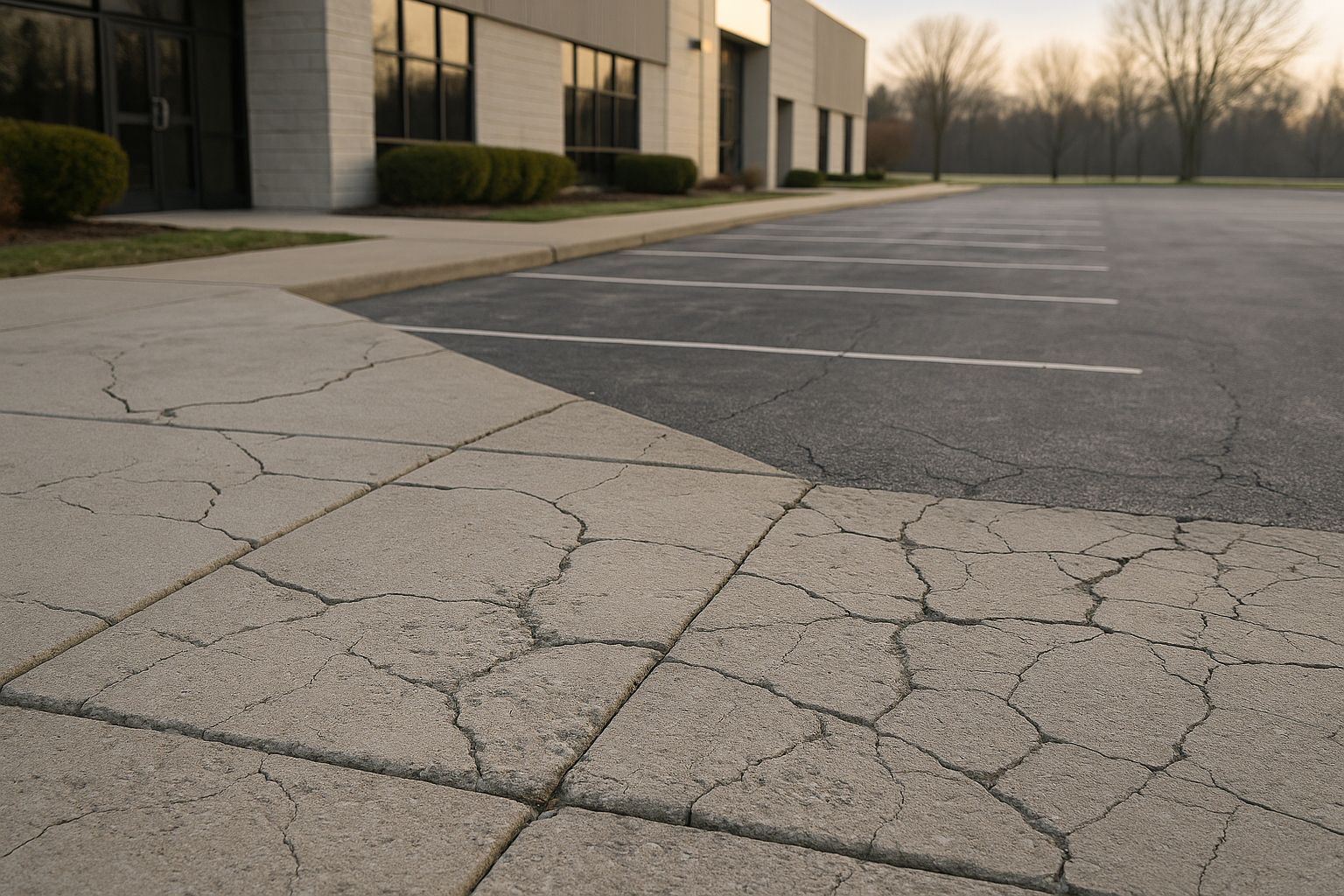
Spring in Indiana has a way of revealing everything winter tried to hide. After months of freeze-thaw cycles, road salt, and ground movement, commercial concrete surfaces often emerge with cracks, heaving, and surface damage that were not there in October. For property managers, catching these problems early in the season is the difference between a straightforward repair and a much costlier fix down the road.
Is your commercial property showing signs of concrete wear heading into spring? HASCO has served property managers across Indianapolis and Central Indiana for over 25 years, handling everything from cracked sidewalk repair to full concrete replacement on loading docks, curbs, and parking lots. Contact HASCO, Inc., today at hascoinc.com or call (317) 279-5124 to schedule a spring assessment.
8 FAQs About Spring Concrete Repair for Indiana Commercial Properties
1. Why Is Early Spring the Best Time to Schedule Concrete Repairs in Indiana
Timing matters more than most property managers realize. Once temperatures in Central Indiana consistently stay above freezing, concrete repair materials can cure properly and bond the way they are designed to. Repairs attempted during cold snaps or freeze-thaw windows often fail prematurely because the materials cannot set correctly, which means you end up paying for the same repair twice.
Early spring also gives you a head start before your property sees its highest foot and vehicle traffic. Retail centers, office parks, and apartment complexes all experience increased activity as the weather improves. Scheduling repairs in April means disruption is minimal and surfaces are ready well before the busy season hits. Waiting until summer means competing with every other property manager who delayed, which can push your project timeline out by weeks.
There is also a liability window to consider. Trip hazards that develop over winter do not wait for a convenient repair date. The sooner cracked or heaved concrete is addressed, the sooner that exposure is closed.
2. What Are the Most Common Concrete Problems That Show Up After an Indiana Winter
Indiana winters are particularly hard on concrete because of the repeated freeze-thaw cycle. Water works its way into small surface cracks or pores, freezes, expands, and creates larger openings on the way out. This process can happen dozens of times between November and March, and the cumulative damage shows up clearly in spring.
The most common issues property managers find include surface spalling, where the top layer of concrete flakes or chips away. Road salt accelerates this significantly, which is why surfaces near entrances, parking areas, and loading zones tend to show the worst wear. Cracking is another frequent finding, ranging from hairline fractures to wider structural cracks that allow water to penetrate further into the base.
Tree root uplift, settlement cracks near expansion joints, and heaving from soil movement are also common after a hard winter. Curbs, sidewalks, and concrete dumpster pads tend to show damage earlier than interior surfaces because they are exposed to both weather extremes and heavy daily use. Drain collars, loading docks, and concrete parking lot sections are also worth a close look each spring.
3. How Do Cracked Sidewalks and Trip Hazards Create Liability for Property Managers
A cracked or uneven sidewalk is not just an eyesore. It is a documented hazard, and in many cases, property managers are legally responsible for maintaining safe walking surfaces on their properties. If a tenant, customer, or visitor trips and falls on a known hazard, the property owner or manager can face significant liability.
The phrase “known hazard” matters here. Courts and insurance adjusters look at whether the damage was visible and whether reasonable steps were taken to address it. A crack or raised concrete edge that survived a full winter without repair is very difficult to classify as unknown. Documenting your spring inspections and acting promptly on what you find is one of the most straightforward ways to protect your property and your organization.
Beyond legal liability, a damaged walking surface affects the experience of everyone who uses your property. First impressions start in the parking lot and along the walkway to the entrance. A well-maintained property communicates that management pays attention to the details.
4. What Is the Difference Between Concrete Patching, Resurfacing, and Full Replacement
Understanding your repair options helps you make informed decisions about your maintenance budget and timeline.
Concrete patching is a targeted repair for localized damage such as a cracked section of sidewalk, a deteriorated curb, or a spalled area near a drain collar. It is cost-effective when the surrounding concrete is still structurally sound and the damage is contained.
Concrete resurfacing involves applying a new layer over an existing surface that has widespread surface wear but a stable base. This is appropriate when the foundation is still in good condition but the surface has become rough, pitted, or discolored from years of use and weather.
Full replacement is necessary when the underlying base has failed or when the extent of damage makes patching impractical. If a section shifts underfoot, shows large interconnected cracks, or has repeated drainage problems, replacement is typically the more cost-effective long-term choice. An experienced contractor can evaluate your specific situation and give you an honest recommendation on which approach makes the most sense.
5. Which Concrete Surfaces Should Property Managers Prioritize First in Spring
Not every concrete issue demands immediate attention, and prioritizing helps you allocate your maintenance budget effectively.
Safety-related surfaces come first. Sidewalks and pedestrian walkways with raised edges, heaved sections, or cracks wider than a quarter inch should be addressed as soon as temperatures allow. These directly affect pedestrian safety and carry the highest liability exposure.
High-traffic functional surfaces are next. Loading docks and concrete aprons take a constant beating from delivery vehicles and forklifts. Damaged surfaces in these areas create safety hazards for workers and can disrupt operations. Concrete dumpster pads and drain collars are also worth early attention, as deterioration in these areas can create drainage problems that spread damage to adjacent surfaces.
Curbs and parking lot concrete sections are important but slightly lower priority than pedestrian areas, unless the damage is significant enough to affect drainage or create vehicle damage risk. A spring walkthrough with your contractor helps you sequence the work in a way that addresses the most urgent items first without overextending your budget.
6. How Long Does Commercial Concrete Repair Take and How Disruptive Is It to Tenants and Customers
One of the most common concerns property managers raise is business disruption. The honest answer is that most commercial concrete repairs are manageable with proper planning and clear communication.
Concrete patching for a section of sidewalk or curb typically takes one to two days of active work, followed by a curing period before the surface is open to foot traffic. Concrete cures fully in about seven days, but most patched areas can handle careful foot traffic within 24 to 48 hours under good conditions. Vehicle traffic generally needs to wait longer, around five to seven days, depending on the depth of the repair.
Larger projects such as loading dock replacement or full sidewalk sections take longer, but experienced contractors like HASCO plan the work in phases to keep key access points open whenever possible. Notifying tenants and customers in advance, using clear signage, and scheduling work during lower-traffic periods all help minimize the impact on daily operations.
7. What Should Indiana Property Managers Look for When Hiring a Concrete Repair Contractor
The quality of the contractor matters as much as the quality of the materials. When evaluating options for commercial sidewalk repair or any concrete work on your property, look for a few key qualities.
Experience with commercial properties specifically is important. Residential concrete work is different from commercial in terms of scale, load requirements, and the need to minimize business disruption. A contractor with a strong track record in commercial property maintenance understands those requirements without being told.
Transparency and clear estimates separate the best contractors from the rest. A reputable contractor will assess your property, explain what they find, and provide a detailed written estimate before any work begins. Vague quotes or pressure to commit before a full assessment is a signal to look elsewhere.
References and reputation matter too. Ask for references from comparable commercial projects and check online reviews. HASCO has built its reputation in the Indianapolis market over more than 25 years by delivering consistent quality and honest communication on every project, from small sidewalk repairs to full-scale concrete replacement.
Finally, verify that the contractor carries appropriate liability insurance and that their work is guaranteed. You want to know that if something is not right, it will be corrected.
8. How Can Routine Spring Maintenance Extend the Life of Concrete Surfaces on Commercial Properties
Concrete is one of the most durable materials available for commercial surfaces, but it does require regular attention to reach its full lifespan of 20 to 40 years. Routine spring maintenance is one of the highest-return investments a property manager can make.
Sealing cracks early is the single most effective preventive step. Small cracks that are filled before the next winter cannot allow water in, which means they cannot grow through another round of freeze-thaw cycles. A crack that costs a few hundred dollars to seal today can cost several thousand to repair next spring if left unaddressed.
Maintaining proper drainage is equally important. Water that pools on or around concrete surfaces accelerates deterioration. Clearing drains, correcting low spots, and ensuring curbs and edges are intact all reduce the amount of water that sits against your concrete through the season.
A consistent spring inspection schedule, ideally conducted with a contractor who knows your property, allows you to catch problems when they are still minor. Over time, this approach keeps your maintenance costs predictable and avoids the emergency repairs that tend to be both expensive and disruptive.
Contact HASCO Today for Professional Concrete Services
Ready to get your commercial property’s concrete surfaces in shape for spring? Contact HASCO, Inc., today to schedule an assessment. With over 25 years of experience serving Indianapolis and Central Indiana, our team handles commercial concrete construction, installation, repair, and replacement for sidewalks, curbs, loading docks, drain collars, dumpster pads, and parking lots. Call (317) 279-5124 or visit hascoinc.com to get a free estimate and put your spring maintenance checklist in motion.